Syria Adak Qurbani
What is an Adak (Vow) Qurbani?
Adak, meaning "vow" (nezir) in Arabic, refers to a person pledging to perform an act of worship that is not originally obligatory upon them (farz or wajib), making a promise to Allah. An Adak is an individual's voluntary commitment to certain religious obligations in order to seek Allah's help and support in achieving a desire or avoiding something they fear.
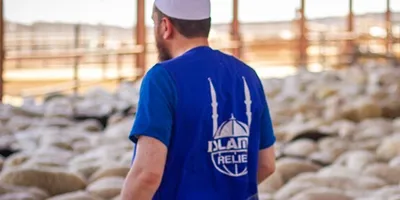
An Adak Qurbani is a sacrifice that a person vows to Allah upon the fulfillment of a specific wish, which becomes obligatory (wajib) to sacrifice once the condition is met. At Islamic Relief, we accept your Adak trusts with the utmost care, sacrificing them in full compliance with Islamic rules and our principle of transparency, and delivering them to those in need who are victims of war in Syria.
Why Islamic Relief?
We deliver your Adak sacrifices as a blessing to the tables of our Syrian brothers and sisters who have been struggling with conflicts and crises for years. Your trusts are in safe hands with our slaughtering processes, which are carried out within the framework of hygiene rules by carefully selecting animals that are religiously permissible to sacrifice.
Things to Know About Adak Qurbani
Vows are generally divided into two categories: absolute and conditional.
- Absolute (Unconditional) Vows: These are vows that are not bound by any condition. For example, saying "I will sacrifice an animal for the sake of Allah" is an absolute vow and can be fulfilled at any time.
- Conditional Vows: These are vows tied to a specific condition. For example, saying "If my patient recovers, I will sacrifice an animal for the sake of Allah." If the condition is met, sacrificing the animal becomes obligatory. It is not valid to perform the sacrifice before the condition has been fulfilled.
For a vow to be religiously valid, certain conditions must be met regarding both the person making the vow and the vowed act itself:
- The person making the vow must be Muslim, sane, and have reached the age of puberty.
- The vowed act must be physically possible, religiously acceptable, and of an obligatory (farz or wajib) nature (such as prayer, fasting, sacrifice, charity, etc.).
- The vowed act must not already be obligatory upon the person making the vow.
- Vows of sacrifice can only be made from eligible sacrificial animals; animals like chickens or roosters cannot be used for an Adak Qurbani.
The person who made the vow, their spouse, parents, grandparents, children, and grandchildren cannot eat the meat of the Adak Qurbani. Furthermore, those who possess the Nisab amount of wealth—meaning they are considered wealthy according to Islam—cannot consume this meat either. If any of these individuals do consume the meat, the equivalent value of the consumed amount must be given to the poor as charity. The fundamental principle is that the entirety of the Adak Qurbani must be distributed to the poor and needy.